
Cacio e pepe
How to make it at home: Cacio e pepe — ingredients, steps, safety tips.
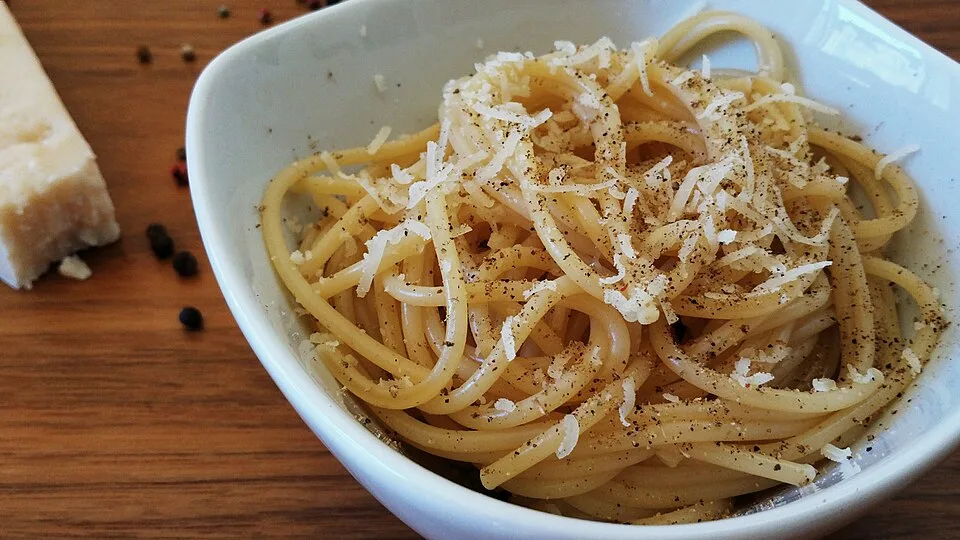

Time: 20 minutes · Yield: 4 servings
Ingredients
- 400 g spaghetti (or tonnarelli)
- 200 g finely grated Pecorino Romano
- 2 tsp black peppercorns
- A little salt for the water
Method
- Bring less water than usual (about 3 litres) to the boil and salt it lightly, so it ends up starchier.
- Crush the pepper coarsely and toast it in a wide dry pan for 1–2 minutes, then add a ladle of pasta water.
- In a bowl, work the pecorino with a few spoonfuls of warm (not boiling) pasta water into a smooth paste.
- Lift the spaghetti out 1–2 minutes before al dente, transfer to the pepper pan and finish cooking, stirring and adding pasta water.
- Take the pan off the heat, let it cool slightly, add the cheese paste and toss quickly, adding water, until the sauce is creamy.
- Serve at once with more pepper.
Tips
- There is no official cacio e pepe recipe; this is the common Roman version — just pasta, Pecorino Romano, pepper and water, with no butter, oil or cream.
- If the cheese clumps, the pan or the water was too hot.
Related topics
Sources
Servings: 4
Themes
🥛Types of milkFrom cow to reindeer: composition, benefits, value🧀Cheeses of the worldParmesan, feta, bryndza, sulguni and more🥣Fermented milk productsKefir, yogurt, kumis, matsoni, skyr🌍Dairy traditionsRegions, peoples and their dairy products🐄Dairy animalsWhich animals are milked and how their milk differs🚚The journey of milkFrom pasture to shop — step by step❤️Milk and healthCalcium, lactose, allergy, benefits and risks👷JobsWho works with milk🗺️Map of traditionsWorld regions, peoples and their products on a map⚖️ComparisonsKefir or yogurt, sour cream or cream, and more🍳RecipesCottage cheese, yogurt, ghee, paneer, butter — at home📜History of milkFrom domestication to Tetra Pak🫒OlivesVarieties, oil, table olives, regions and traditions🥃SpiritsWhisky, brandy, rum, liqueurs: how they are made, what the label says, which traditions