
Pesto alla genovese
How to make it at home: Pesto alla genovese — ingredients, steps, safety tips.
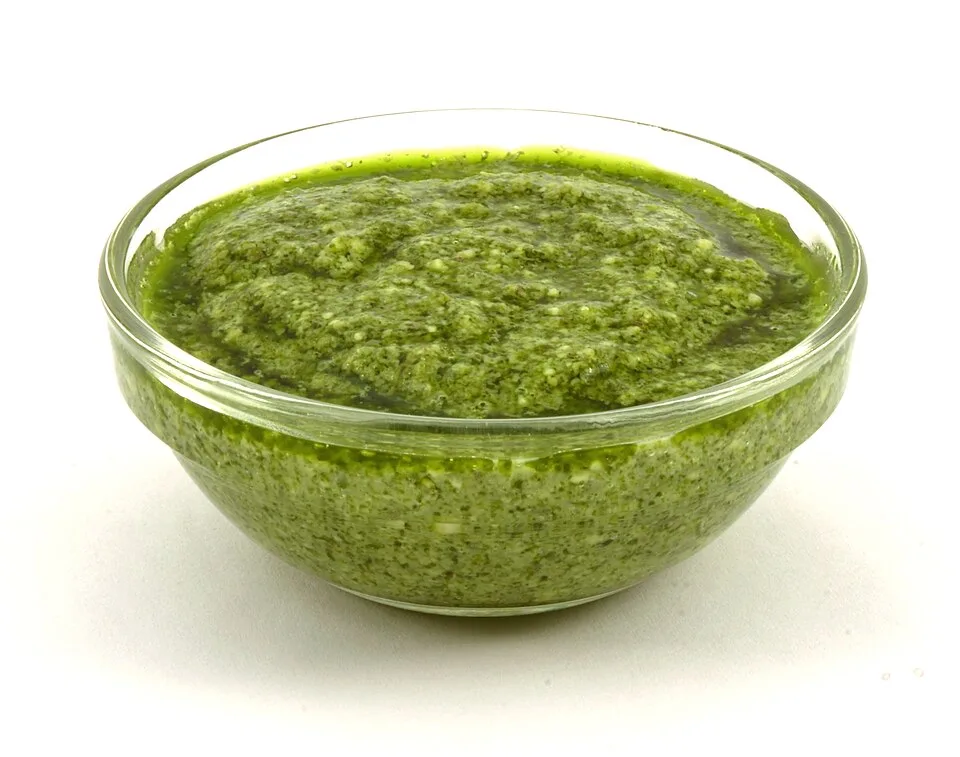

Time: 20 minutes · Yield: Sauce for 600 g pasta (6 servings)
Ingredients
- 50 g small-leaved Genoese basil (preferably young)
- ½ glass extra virgin olive oil (preferably Ligurian)
- 6 tbsp grated Parmigiano Reggiano (or Grana Padano)
- 2 tbsp grated pecorino (Fiore Sardo)
- 2 garlic cloves
- 1 tbsp Mediterranean pine nuts
- A few grains of coarse salt
- 600 g pasta (trofie or linguine) to serve
Method
- Rinse the basil in cold water and spread it on a cloth to dry.
- In a marble mortar, pound the garlic with the coarse salt to a cream.
- Add the pine nuts and pound them in.
- Add the basil leaves a few at a time, working the pestle in slow circles so the leaves are torn rather than crushed.
- Stir in the Parmigiano and pecorino.
- Drizzle in the oil slowly, stirring, until the sauce comes together.
- Dress the cooked pasta; if the pesto is too thick, loosen it with a few spoonfuls of pasta water.
Tips
- Recipe and proportions follow the Consorzio del Pesto Genovese.
- Work at room temperature and quickly, to limit oxidation of the basil. The mortar is preferred, but a blender is acceptable.
- In Genoa potatoes and green beans are often cooked with the pasta, but they are not part of the Consorzio recipe.
Related topics
🌿 Pesto alla genovese · 🧀 Parmesan · 🧀 Pecorino · 🫒 Olive oil · Trofie · Linguine
Sources
Servings: 6
Themes
🥛Types of milkFrom cow to reindeer: composition, benefits, value🧀Cheeses of the worldParmesan, feta, bryndza, sulguni and more🥣Fermented milk productsKefir, yogurt, kumis, matsoni, skyr🌍Dairy traditionsRegions, peoples and their dairy products🐄Dairy animalsWhich animals are milked and how their milk differs🚚The journey of milkFrom pasture to shop — step by step❤️Milk and healthCalcium, lactose, allergy, benefits and risks👷JobsWho works with milk🗺️Map of traditionsWorld regions, peoples and their products on a map⚖️ComparisonsKefir or yogurt, sour cream or cream, and more🍳RecipesCottage cheese, yogurt, ghee, paneer, butter — at home📜History of milkFrom domestication to Tetra Pak🫒OlivesVarieties, oil, table olives, regions and traditions🥃SpiritsWhisky, brandy, rum, liqueurs: how they are made, what the label says, which traditions